
Is this AI tool good enough?
by Ada Homolova · November 24, 2026
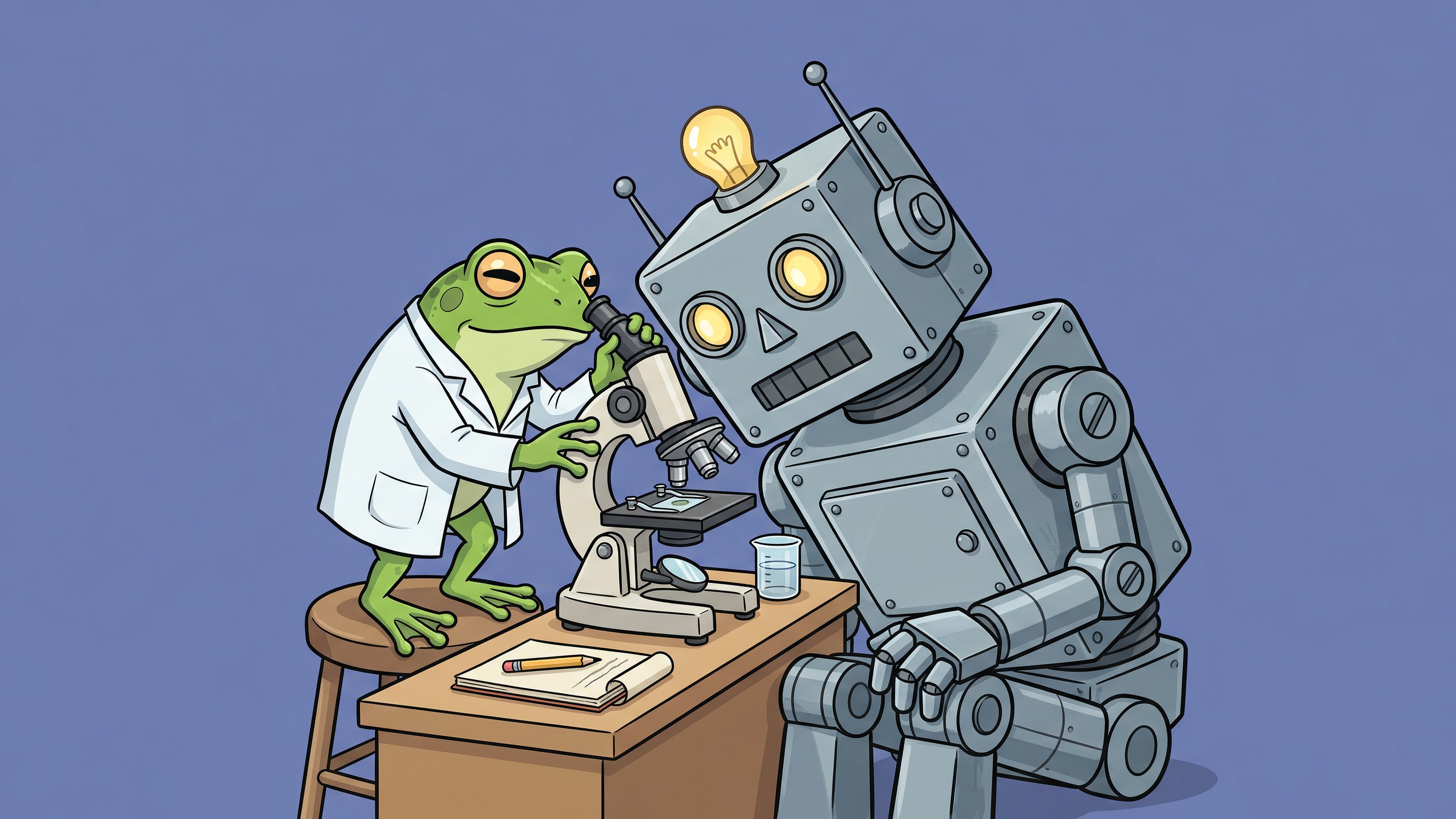
Do you ever evaluate your workflow? As journalists, we are curious, but also very busy. We experiment, some tools stick around and some don't, and we don't really evaluate why.
Last week at the Journalism AI Festival, Jay Barchas-Lichtenstein, from the Center for News, Technology & Innovation (CNTI), offered a framework in evaluating whether an AI tool was good enough for their purposes.
Tools under a microscope
When evaluating an AI tool, Jay asks: "Is this tool good enough for this purpose?"
For example, let's take transcription (everybody loves to hate that). Transcribing an hour of audio manually takes 6-10 hours, and checking a machine-generated transcription of an hour of audio takes 1-2 hours. It comes with errors (is it accurate?), it's biased, it doesn't always work for all languages or accents, people's names are almost certainly going to be wrong.
But is that good enough if you missed a meeting and want to know what happened in it? Sure. What about if I want to quote somebody? In that case, not really good enough.
There are two ways to evaluate a tool:
- Benchmarks: they're tempting because you get a number, but a benchmark is a multiple choice test and all you need is for someone to do the thing. The benchmarks aren't tuned to your writing or language, and when the model fails it doesn't tell you why or how to fix it.
- A real world test: pick 10 or 20 examples of your kind of material, the kind of thing you'd give to the AI tool. You already know the answer for these so you can measure the error rate and, importantly, measure the time it takes you to find those errors. Something 90% accurate but takes three hours to check is worse than something 80% accurate that takes 20 minutes to check.
So what to look for? There's five values that researchers and journalists keep coming back to. I like them as questions to ask:
- Accuracy: How often is it wrong? How much checking do I need to do?
- Neutrality and objectivity: What biases will it introduce? Is there a way of working around it or is it biased in the part I need most?
- Transparency: Can I trace the answer to something? Is it telling me why it answered the way it did?
- Autonomy and independence: Who controls or owns this tool? Where does my data go? (Also check out our post on digital independence.)
- Efficiency: Does it really save me time?
Plus the practical ones: how much does it cost, how much training is needed, can a colleague do it without me hovering over their shoulder?
You can build such a test in one afternoon:
- Write down what you want it to do, for example: "transcribe this interview into a 300 word summary I can fact check in 10 minutes" is a testable goal, "use AI for audio" is not.
- Take 10 real life examples from your past work
- Run them all through the tool
- Write down what was wrong for each one and how long it took you to find it
- Compare it with doing it manually (on the 10 examples)
You'll know if it's good enough. You'll know where it fails (and will continue to fail) so you can predict and work around it. You'll have a baseline you can re-run later.
Be aware that this is not a one time decision: you'll also need to revisit this when something in the tool, the workflow or the purpose changes.
It's important that we know the tools we are using. Get familiar with them.
It was the Journalism AI Festival last week, and this is one of the talks that resonated with us at Data Frosch. Here is a bit longer briefing from CNTI themselves. And if you want to hear the talk in full, it starts at 48:26 on day one:
🐸 Want to test out an AI tool with us? Every two weeks, we host a session at The Pond. Come say hi.